West Branch – Lower Cedar Watershed
University of Iowa graduate students in Professor Eric Gidal's ENGL 6765: Bioregionalism in History, Theory, and Practice course explored traditions of bioregionalism in geography, civics, literature, culture, and the arts to create seven proposals for future community engagement in West Branch and the Lower Cedar Watershed.
Bioregionalism refers to the traditions of thought and expression that connect culture and society to local ecosystems and environmental conditions. For the Lower Cedar Watershed in eastern Iowa, the concept encompasses seven counties and twenty-five cities and what is generally thought to include the most biologically diverse landscape in Iowa.
Students in the course studied the natural and agricultural histories of Iowa and the Upper Mississippi Watershed while reading essays and narratives by writers such as Wendell Berry, William Least Heat-Moon, bell hooks, Robin Wall Kimmerer, Aldo Leopold, Cornelia Mutel, and Gary Snyder. The class learned about numerous arts and literary projects in the Upper Mississippi and met with people and organizations in their own region who are working to connect ecological health and social benefits. They learned about the environmental challenges of soil depletion, water pollution, and flooding that face Iowa as well as many initiatives and organizations who work to address these challenges through conservation agronomy, environmental engineering, advocacy, and the arts.
Based on their research and community engagement, the students developed project proposals for the Lower Cedar Watershed Management Authority and the City of West Branch that seek to connect communities to their watershed through creative initiatives and participatory events. Students applied training in creative writing and literary studies in combination with what they learned about the region to help serve community needs. The project proposals seek to create opportunities for community members to connect with each other and the Lower Cedar Watershed in ways that are creatively engaging. They are all adaptable and are intended to suggest ideas rather than to prescribe the final product.
The project proposals are:
- Witness Tree: an installation on the Wapsinonoc Creek to combine natural history with community stories.
- The Lower Cedar Watershed Cookbook: a community cookbook based on other regional cookbooks from West Branch and Scattergood Friends School.
- A Watershed Bragging Board: a physical and virtual bragging board for fishers to celebrate their catches in the Lower Cedar.
- Stories from the Lower Cedar: an ArcGIS story map featuring anecdotes and histories from residents of the Lower Cedar, potentially overlaid onto the Conservation Projects in the Lower Cedar Watershed story map.
- Prairie Tales: a youth-oriented environmental writing program modeled on the recently discontinued Iowa Youth Writing Program at the University of Iowa.
- On Paper: a pamphlet both made of and concerning plants, both native and invasive, found in the Lower Cedar.
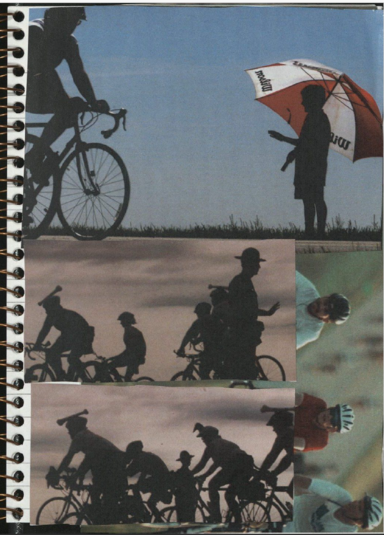
- RAGBRAI in the Years to Come: a short zine calling attention to changing environmental conditions experienced by cyclists passing through the Lower Cedar.
Many of these projects offer different media for collecting and sharing stories from the communities situated in the Lower Cedar. Connecting these stories to the environmental and economic challenges facing the Lower Cedar offer means to encourage participation in conservation efforts throughout the watershed. The other projects propose small pamphlets or zines that use creative images and reflections to raise regional environmental awareness. All of these proposals seek to apply concepts of bioregionalism as both a literary and an environmental ideal, complementing the many other projects and initiatives pursued by the Lower Cedar WMA.